American Express Membership Rewards
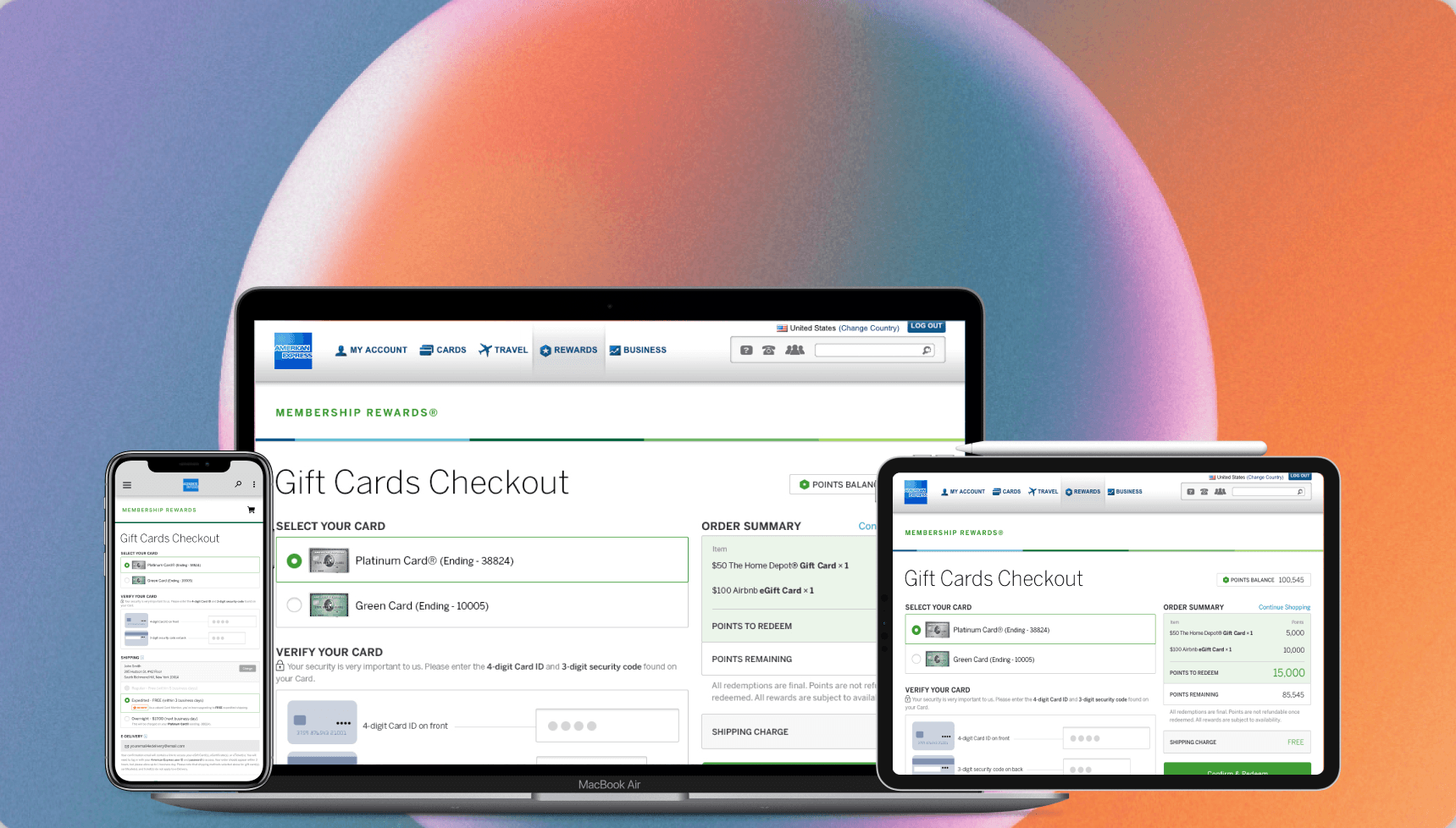


My Role
Contributed to redesigning the membership rewards checkout experience across web and mobile, collaborating with cross-functional teams from research to final UI.
Scope
Checkout experience redesign (web & mobile)
Timeline
2-weeks
(Timeline driven by increasing drop-offs in the checkout flow)
Tools Used
Design System
AMEX DS
Identifying the Problem
Despite ~80K users reaching checkout, a significant drop-off occurs in the final steps, indicating friction in the completion flow.
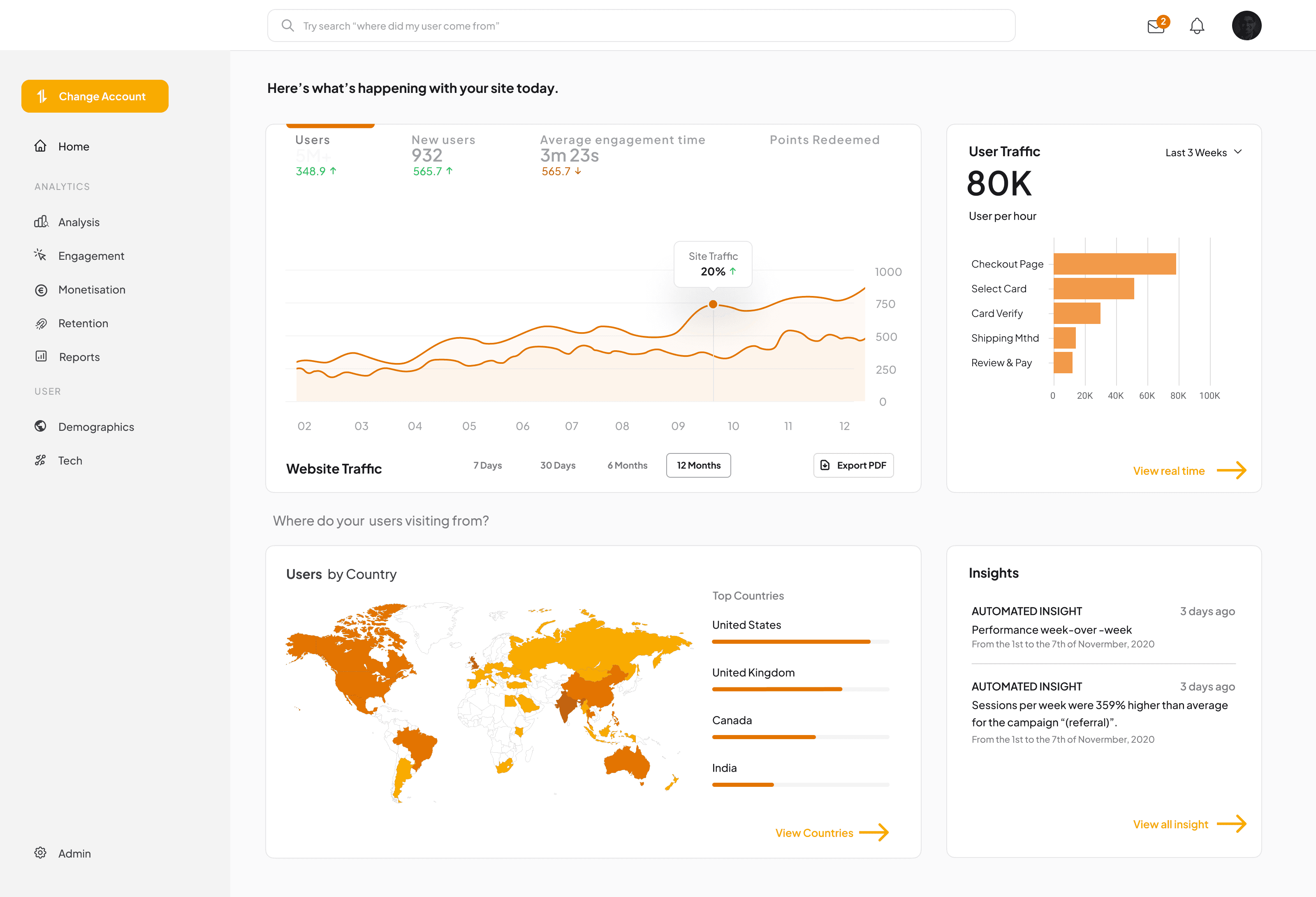
To Investigate further, we conducted Qualitative Research
We observed users completing checkout tasks, focusing on where they hesitated, repeated actions, or dropped off.
These observations were synthesized to identify recurring friction points across the flo

Used empathy mapping to understand user behaviors, thoughts, and emotional friction points.
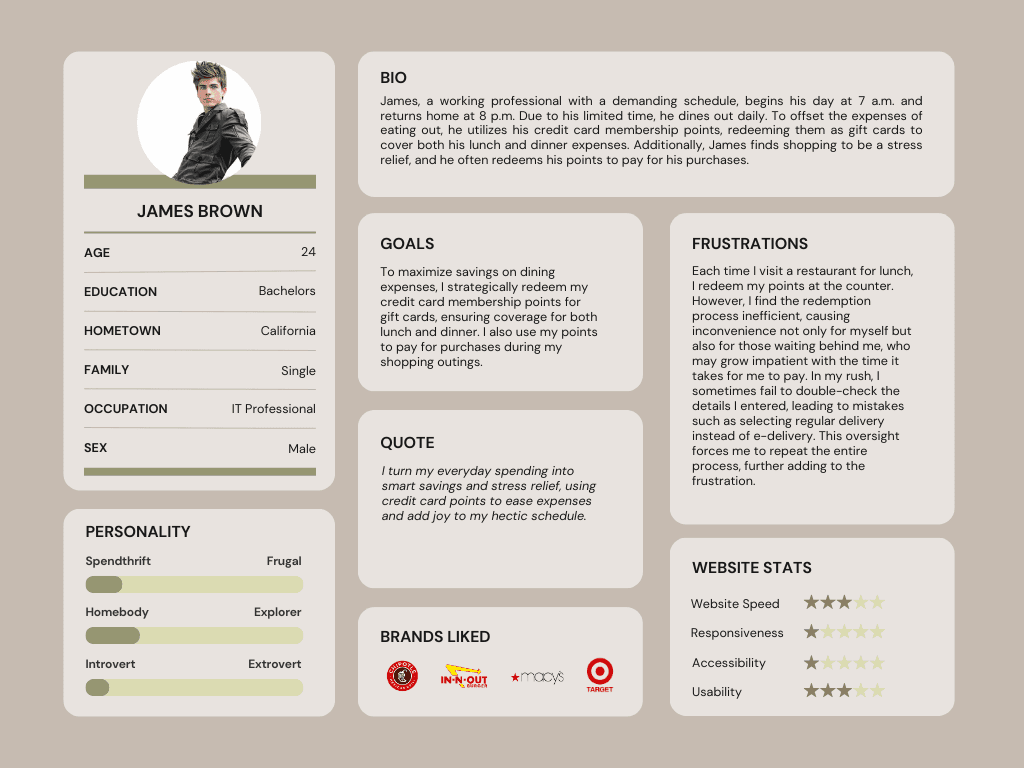
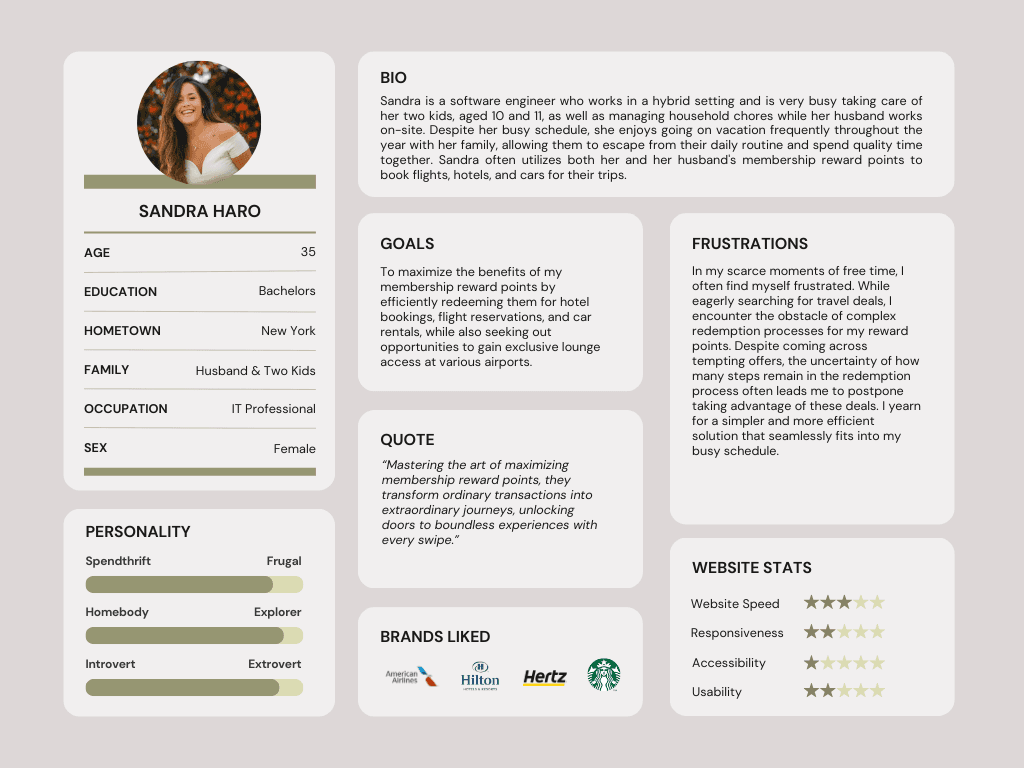
Personas were created to represent primary user behaviors and pain points across the checkout journey.
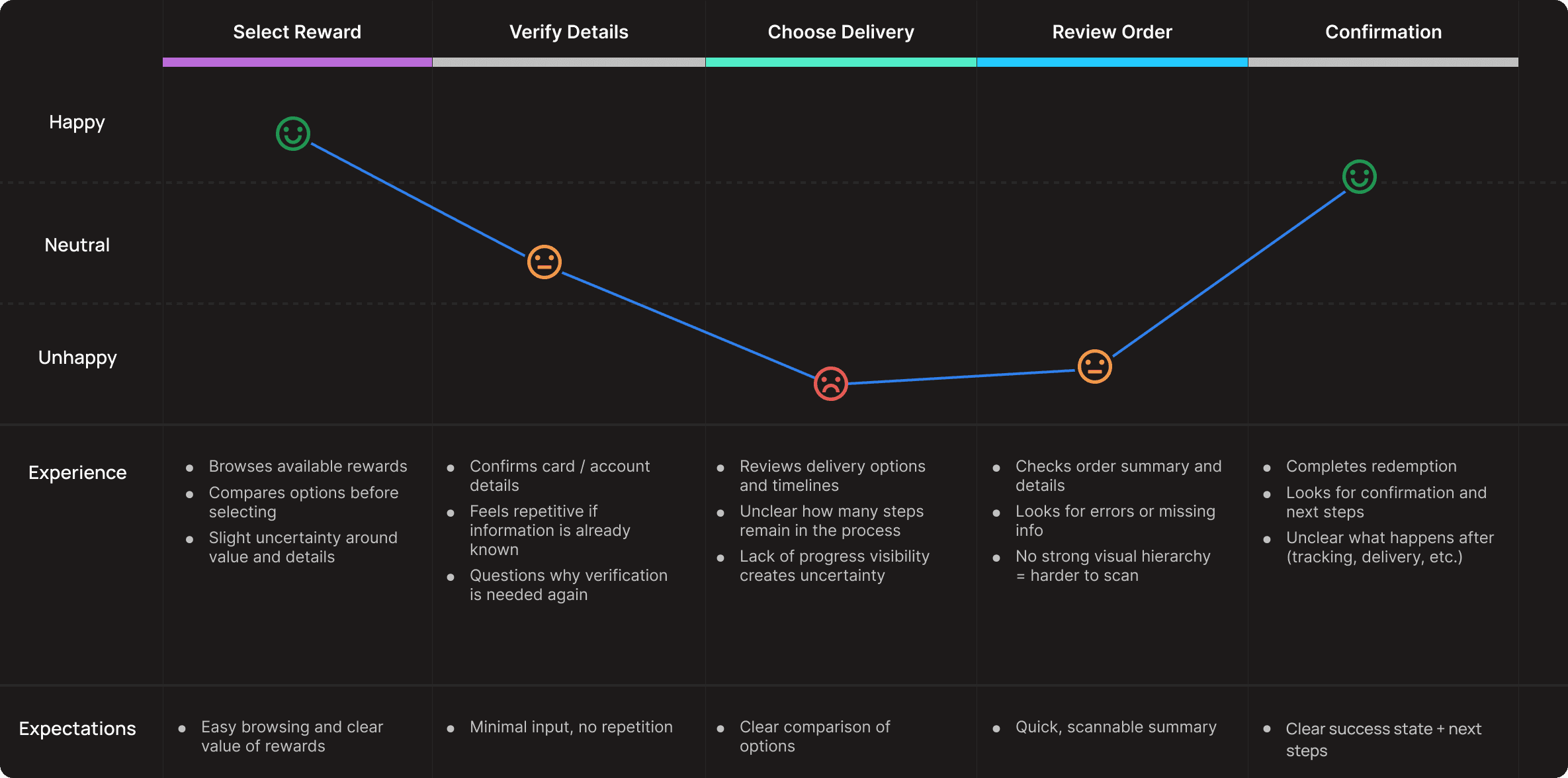
Mapped the end-to-end journey to identify where users drop off and align stakeholders on key friction points.
Key Friction Points
These insights highlighted key breakdowns in the checkout experience, directly contributing to user drop-offs.
One more thing before jumping into the designs
Competitive Analysis
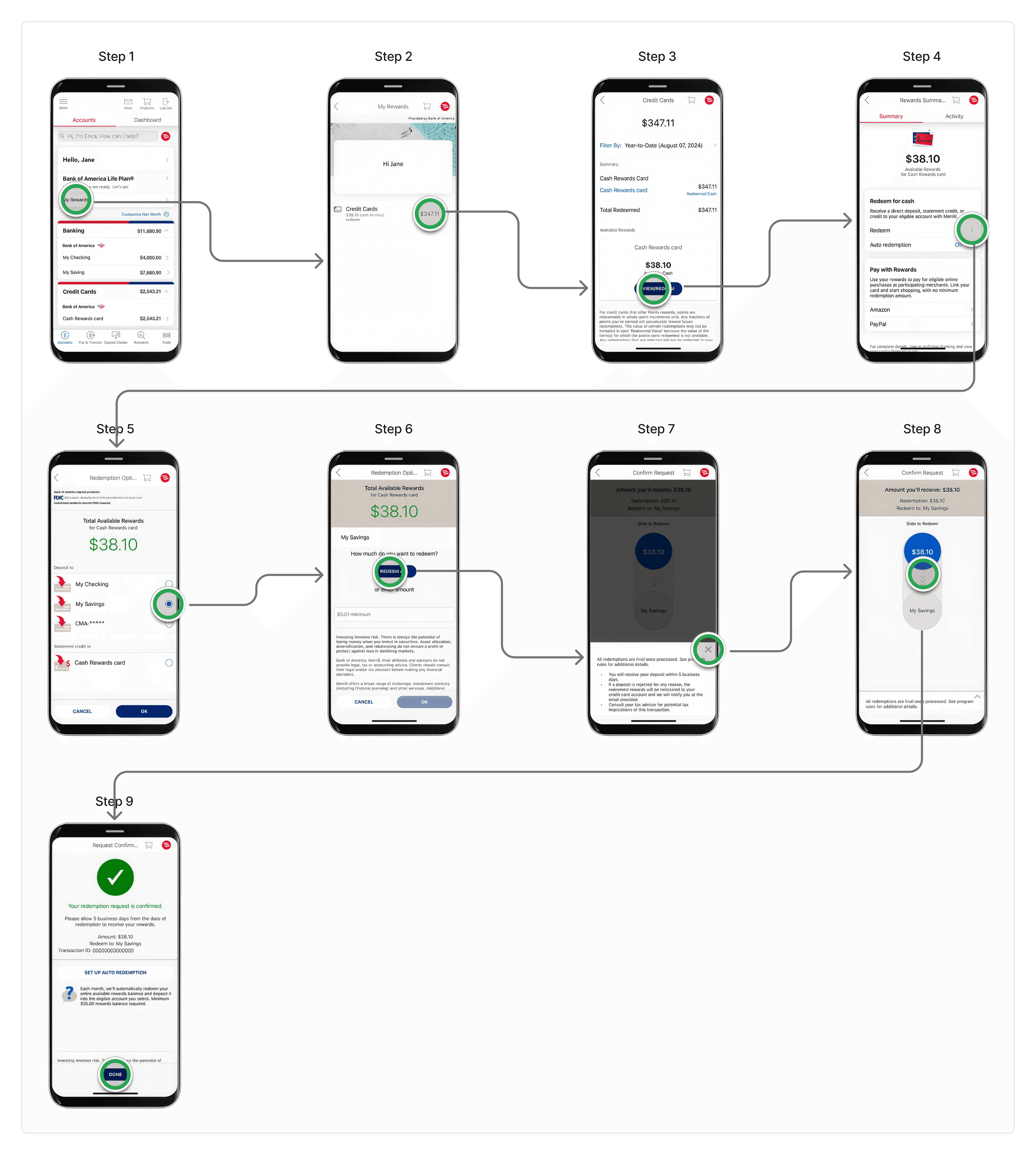
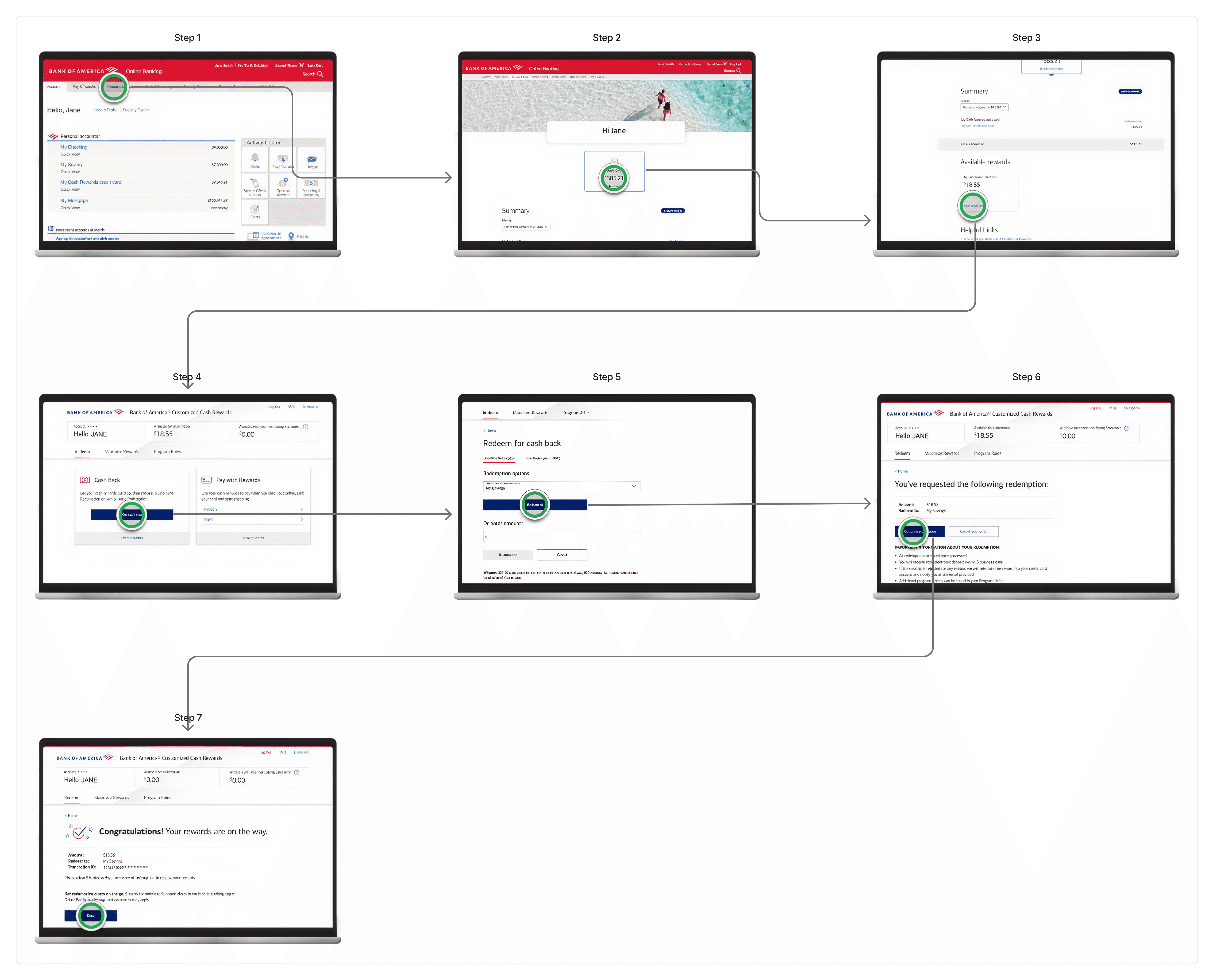
A sneak peek into one of Amex's biggest competitors. Bank of America's points redemption user journey. Both for mobile and web.
My Observations
The flow is broken into manageable steps, making it easier for users to follow and complete the redemption process without feeling overwhelmed.
Key actions (e.g., selection, confirmation) are clearly highlighted, giving users confidence that their inputs are being registered.
Screens follow a predictable structure, reducing the learning curve and allowing users to navigate with minimal friction.
Important steps like reviewing points, confirming selections, and final success states are clearly emphasized, helping prevent errors.
The success screen provides a clear sense of completion, reinforcing that the transaction was successful.
The transition between mobile and desktop flows feels inconsistent, requiring users to adapt to different interaction patterns.
The flow spans multiple screens for what should be a quick, repeatable action — increasing time and effort.
Frequent users are forced through the same linear process instead of being able to skip or accelerate steps.
Not all screens clearly prioritize primary actions, making it harder to quickly identify what to do next.
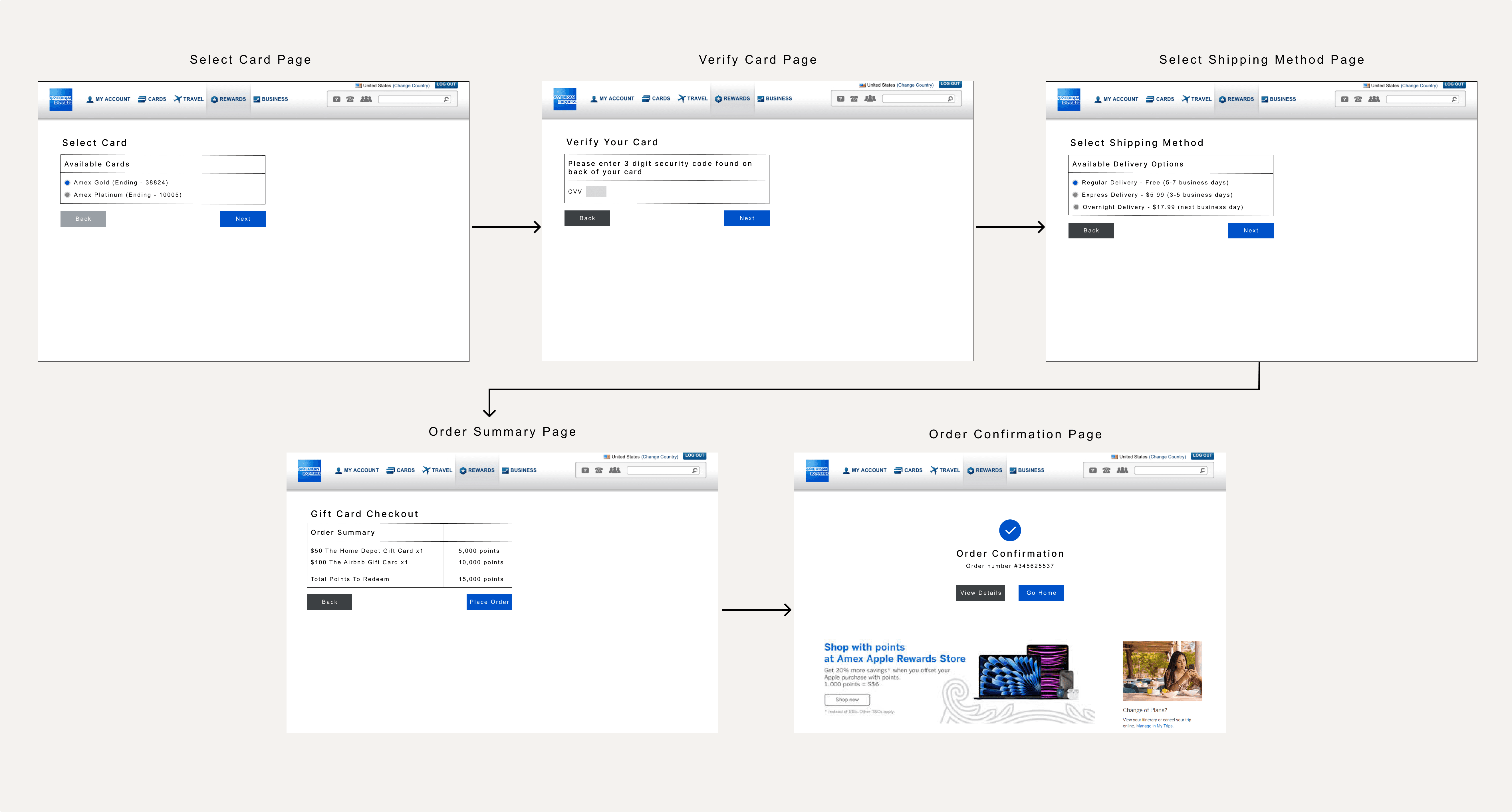
The existing flow is fragmented across multiple steps, requiring users to repeatedly navigate forward and backward.
Choosing a direction
Given the time constraints and user drop-offs, two potential directions were explored.
Path 1
Keep the same architecture and enhance the experience by making changes to the existing pages
Low Effort
Medium Impact
Path 2
Change the underlying checkout architecture and reimagine the experience
High Effort
High Impact
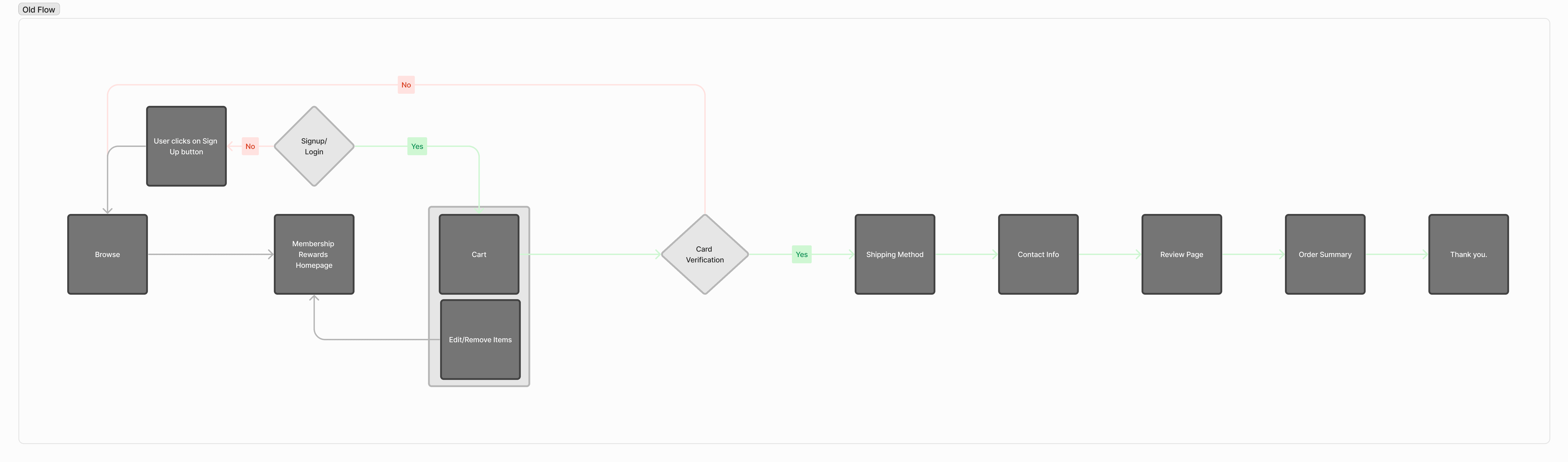
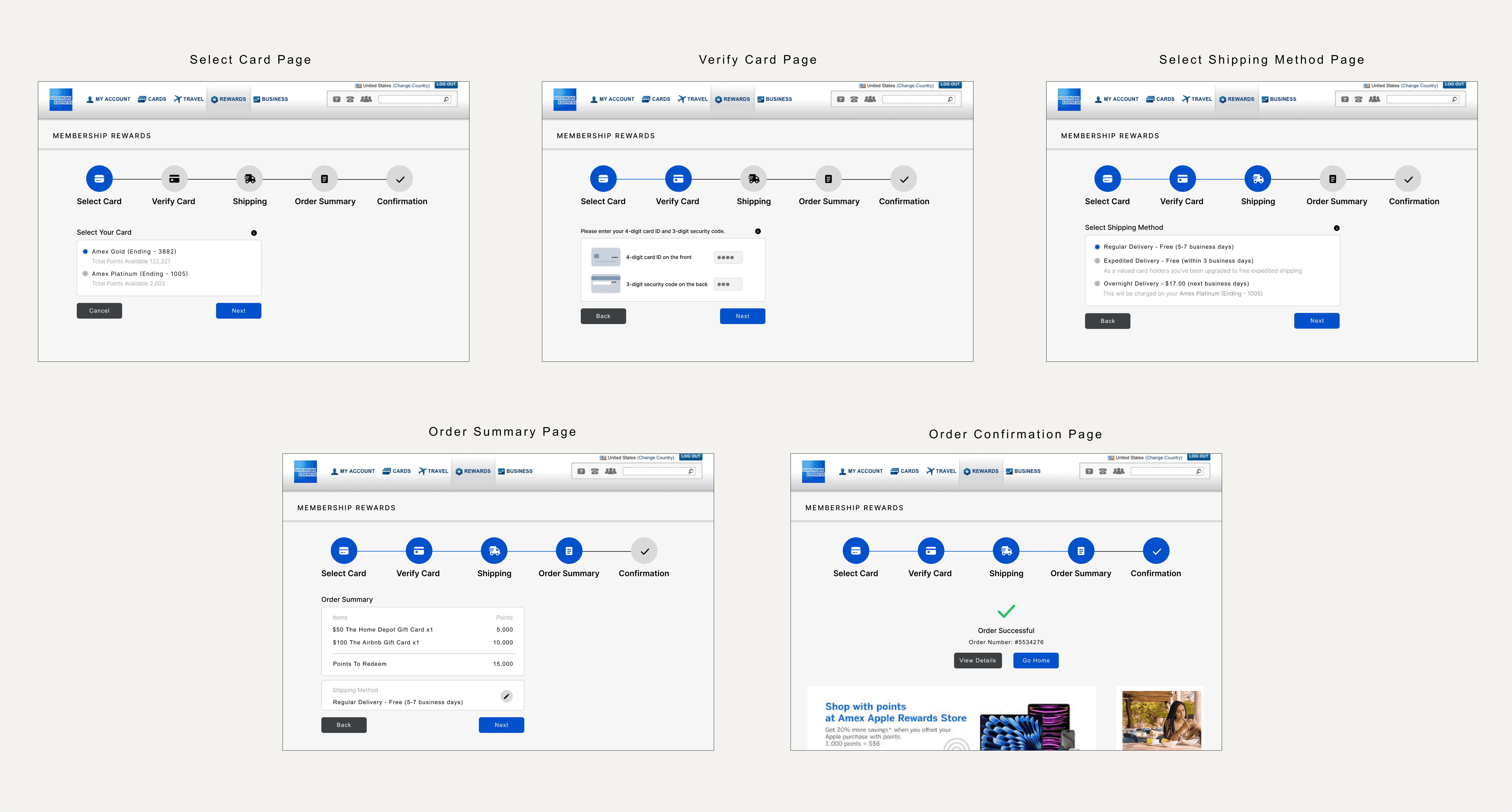
Exploring Path 1
Enhance Existing Experience
Trade-offs
Core flow remains fragmented across multiple steps
Repetitive inputs and context switching still exist
Limited impact on overall drop-off rates
Improves usability, but doesn’t fundamentally solve confidence issues
Exploring Path 2
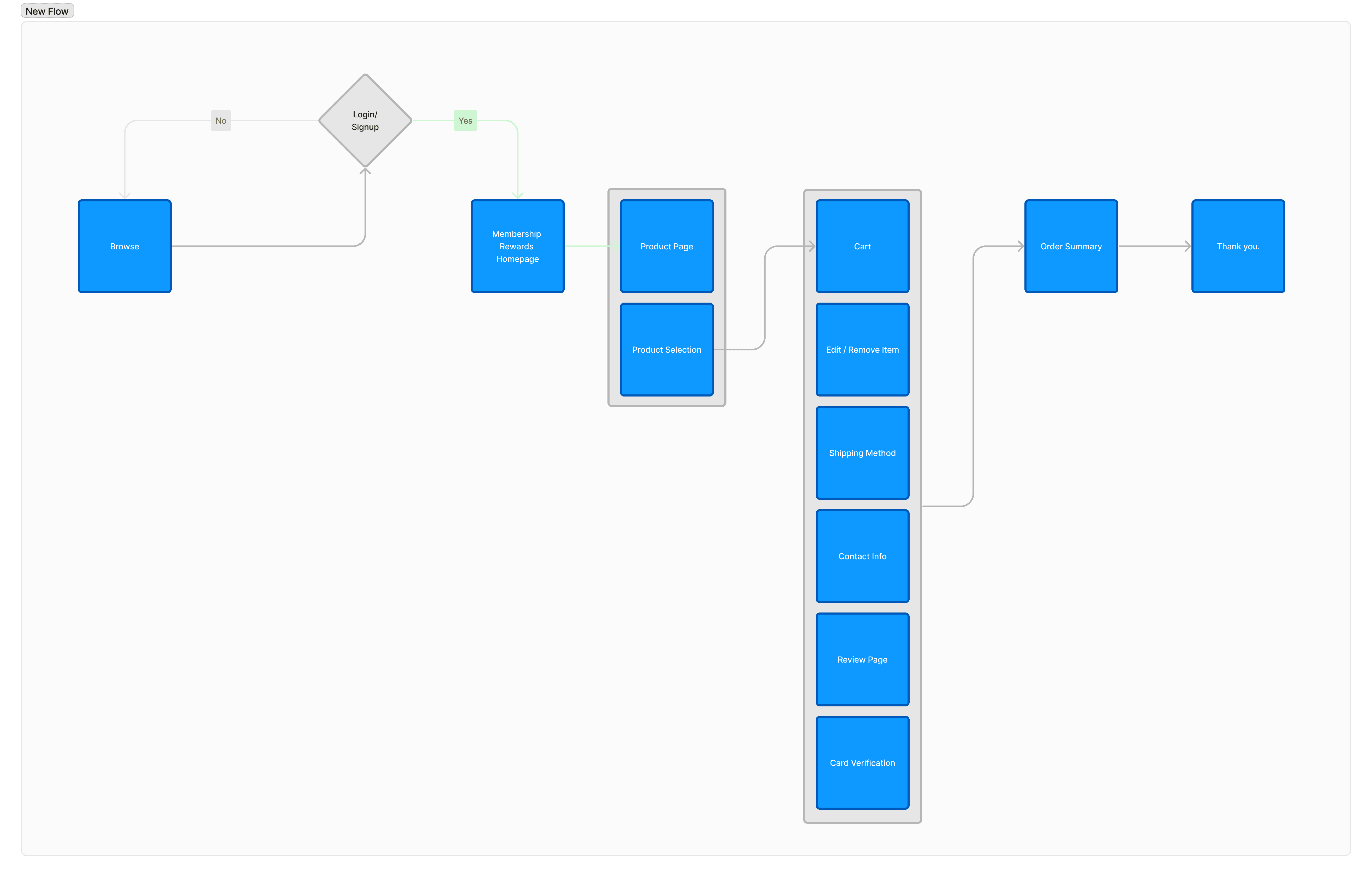
Reimagine Checkout Experience
Combines steps to reduce unnecessary transitions and repetition
Provides clear context (selected card, points, summary) in one place
Improves user confidence through better visibility and feedback
Creates a more seamless, guided flow from start to completion
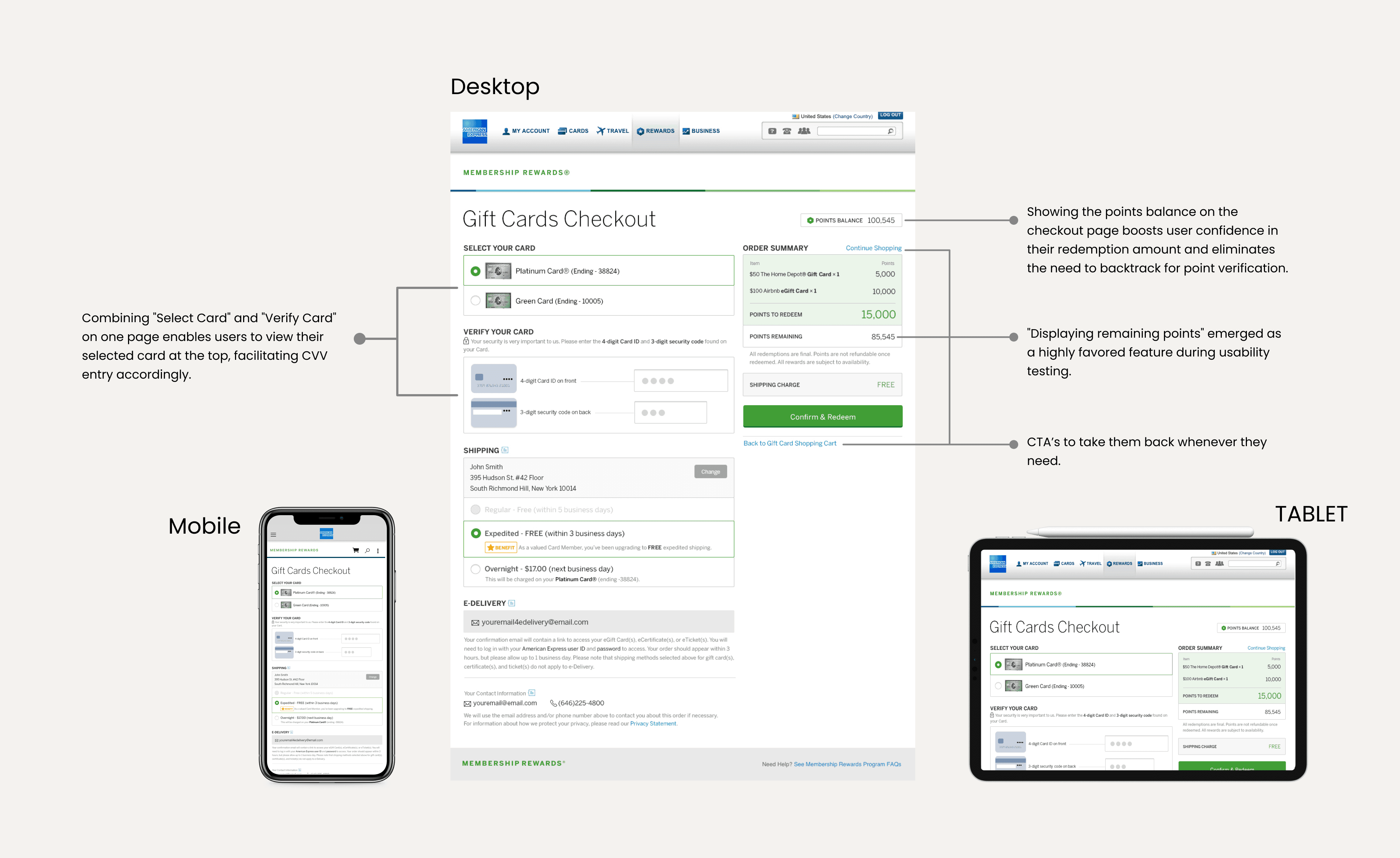
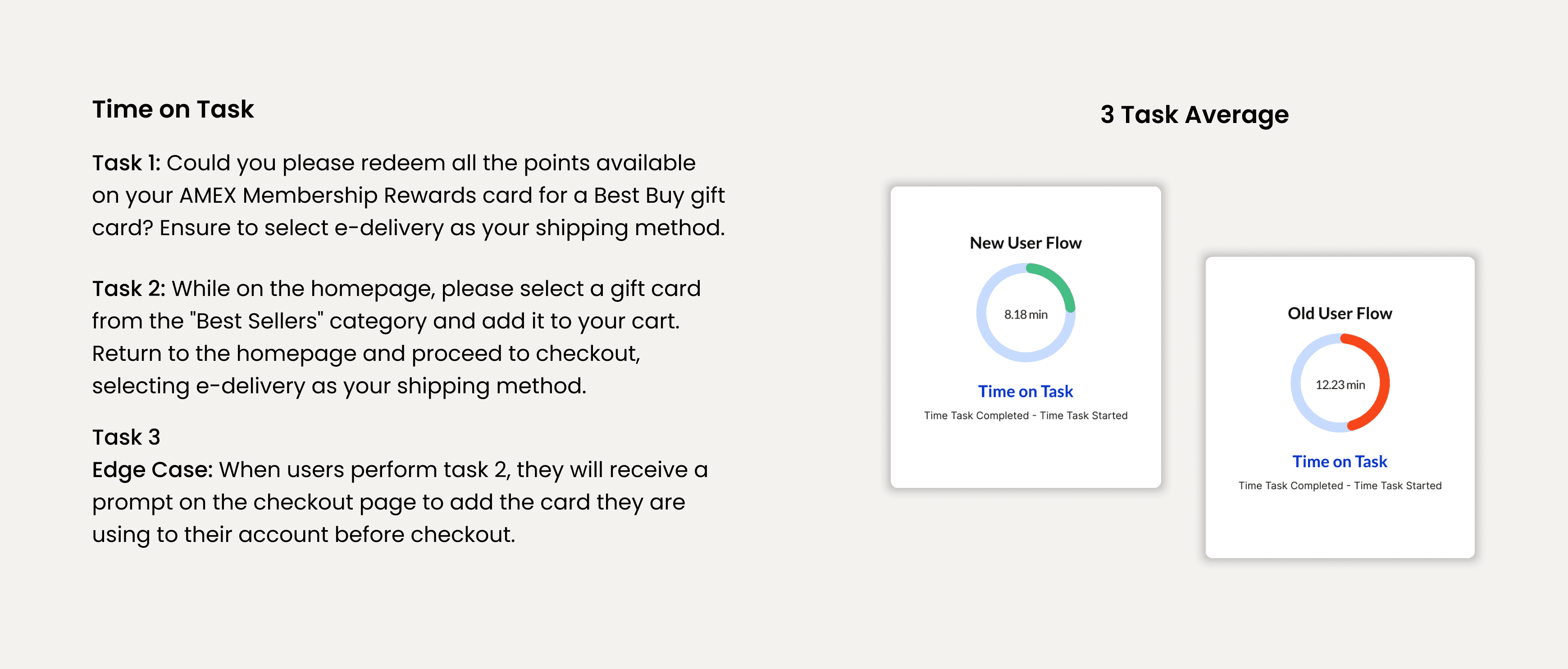
Users completed tasks faster with fewer pauses and backtracking in the redesigned flow.
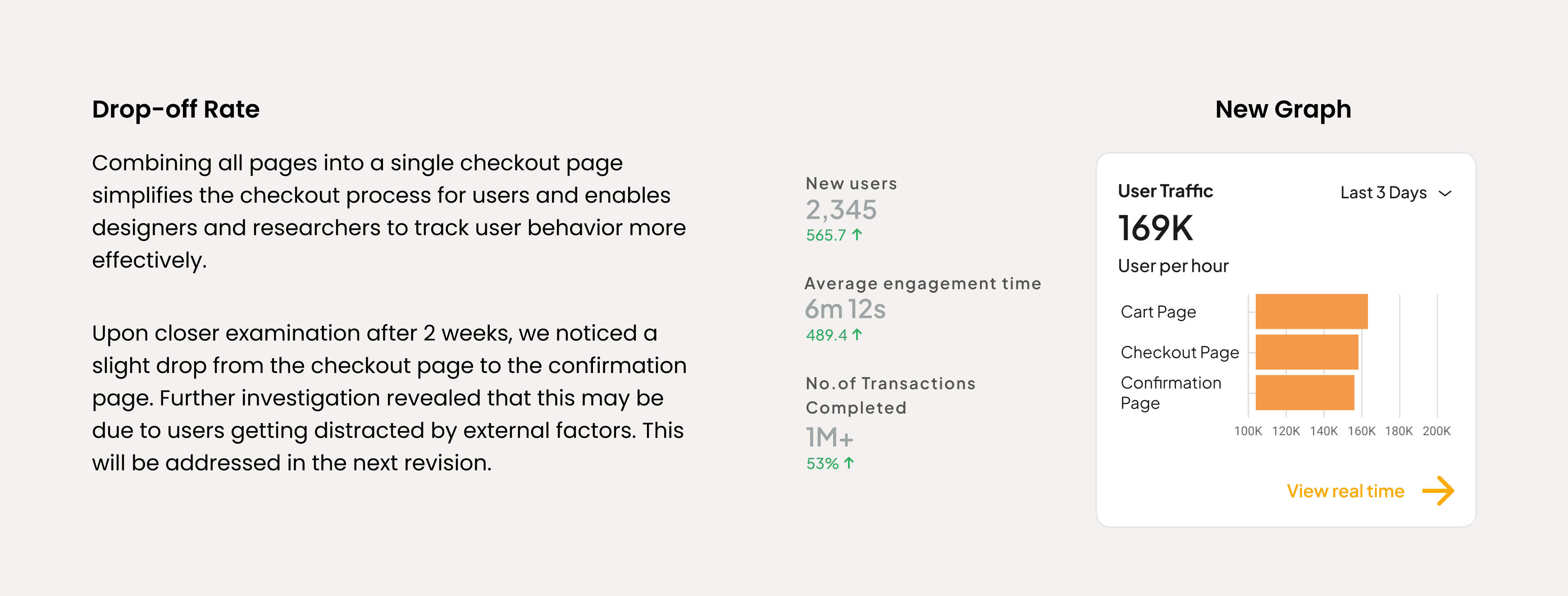
Drop-offs decreased by simplifying steps and reducing unnecessary transitions.
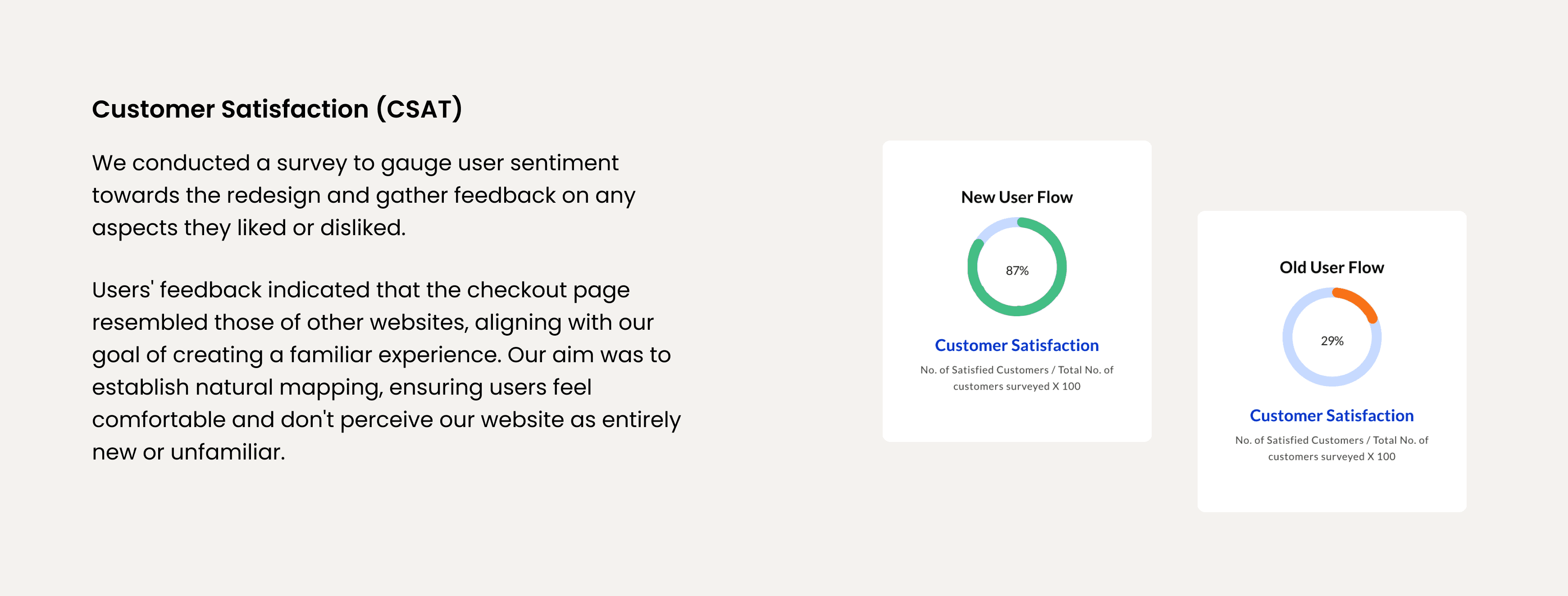
Users reported higher confidence and clarity in the redesigned experience.
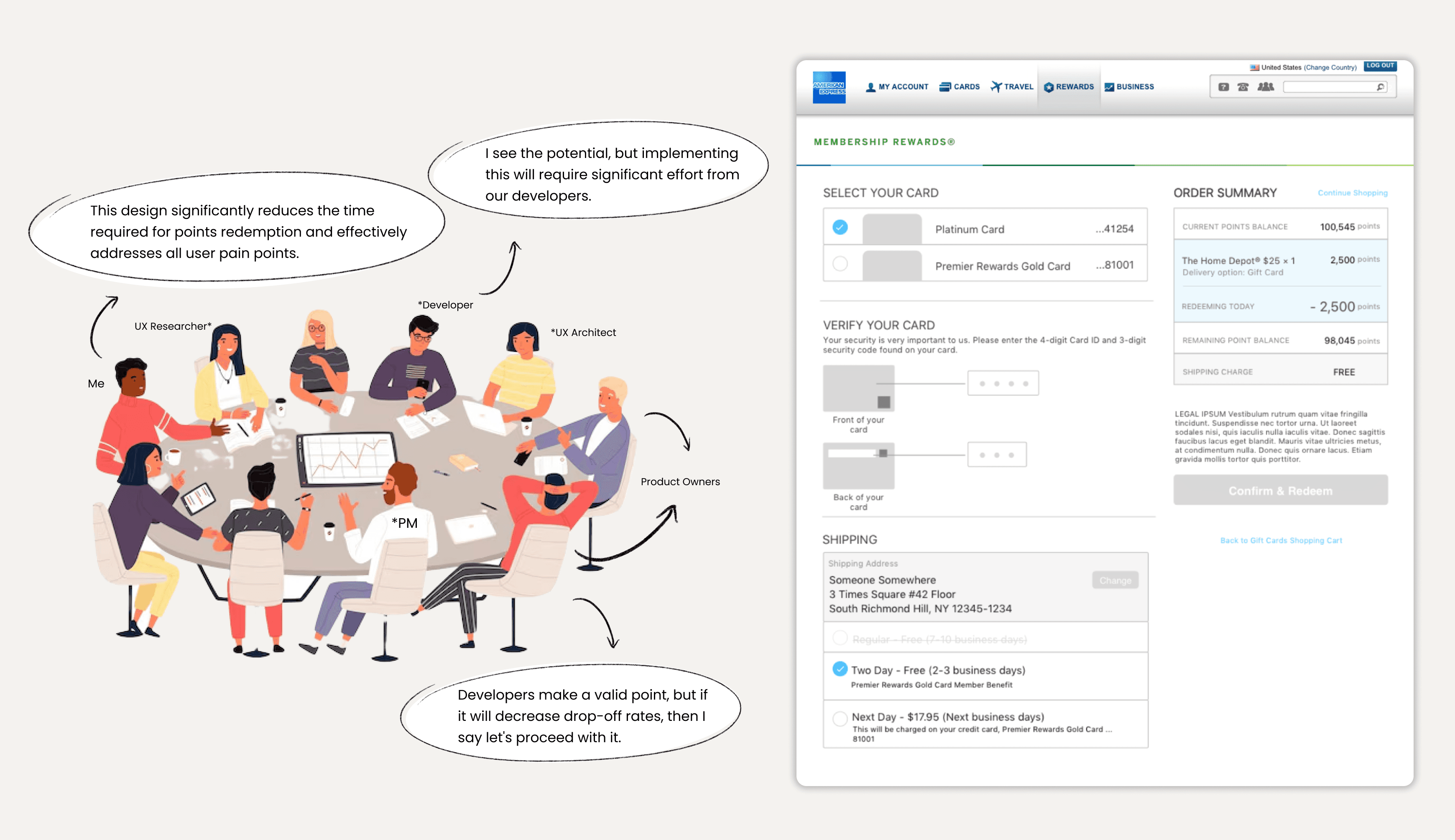
There was initial pushback around effort and implementation complexity. Using A/B testing results and user feedback, I helped shift the conversation from opinions to evidence, enabling the team to align on the higher-impact solution.
Conclusion
Engineering raised valid concerns around implementation complexity, while product stakeholders saw strong value in Option 2. By grounding discussions in A/B testing data and user needs, we aligned on moving forward with the higher-impact direction.
Following alignment, Option 2 was successfully handed off and implemented in collaboration with engineering and product stakeholders.
© 2023. Designed by Harish Bhetalam